Hopeless No More

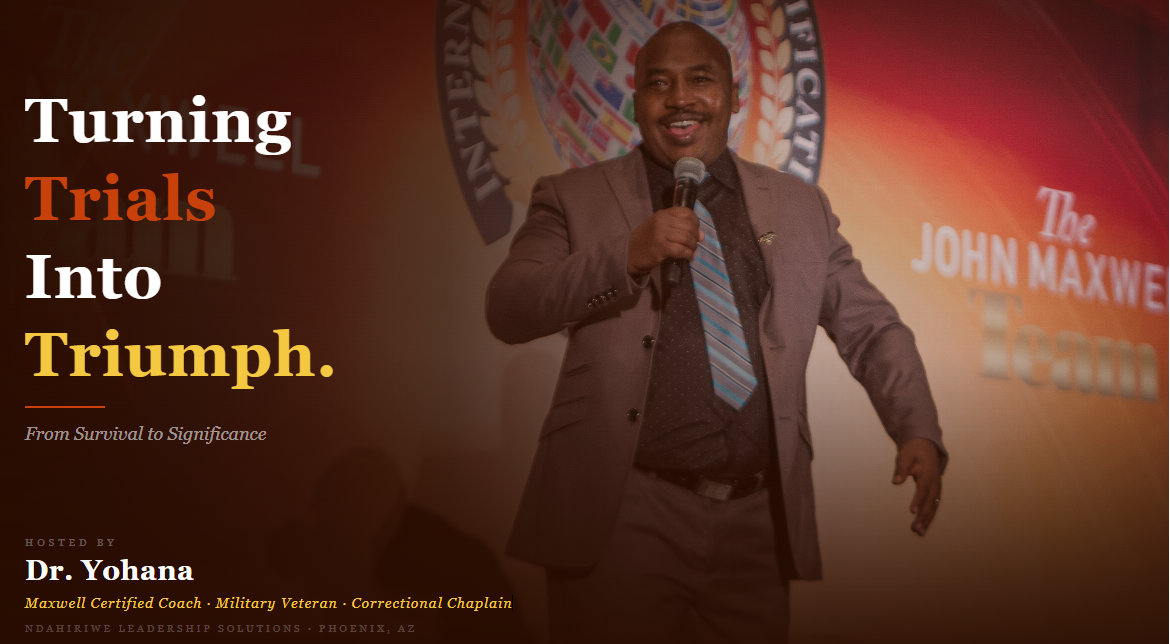
My mother went into labor in a jungle between two nations. There were no doctors. Just wild animals, a terrified father, and a God who was already there.
I joke that instead of doctors and nurses, my mother had lions, snakes, and hyenas at my birth. People laugh. Then I watch their faces shift when they realize I am not entirely joking.
The year was 1973. My father, a Rwandan Tutsi man, grabbed his pregnant wife — my mother — and whatever they could carry, and ran. The killings had started again. University students. Neighbors. Anyone whose face held the wrong bloodline. My father did not wait to become a statistic. He took his family and headed for the border with Uganda.
The border is a jungle. Dense, wild, indifferent to human suffering. And somewhere in that forest — between two nations, belonging to neither — my mother's body announced that I was coming, ready or not.
There were no hospital lights. No sterile gloves. No beeping monitors. Just trees, darkness, the sound of my father's fear, and the mercy of local humanitarians who found them and evacuated them across the border to a makeshift clinic in a place called Kizinga, Uganda.
That is where I was born. In a no-man's land. Literally the strip of earth that belongs to no country.
I was born between two nations. For years, I thought that meant I belonged to neither. God showed me it meant I was prepared for both.
The Running Continued
I spent my earliest years as a refugee in Uganda. Nakivale camp. One of the oldest, largest refugee settlements on the African continent. If you have never lived in a refugee camp, understand this: it is a world built entirely from what other people decided to leave behind. Scraps. Second-chances. Aid packages. Uncertain tomorrows.
I was six years old when Idi Amin's war made Uganda too dangerous to stay. My father gathered us again and we ran — back the direction we came. Back to Rwanda. Back to the homeland that had chased us out in the first place.
There is a Rwandan proverb my father used to say: The hyena of your hometown kills you more mercifully. It means: if you must be destroyed, better to be destroyed by something familiar. We were going home — not because home was safe. Because there was nowhere else left.
In Rwanda, my mother was poisoned. I was told this years later, in the careful language adults use when they are trying to protect a child from something that cannot be un-known. The people who killed her believed Tutsi people should disappear. That we were an inconvenience to a particular vision of the nation. That we should go back to Uganda — or simply go away entirely.
I was six years old. My mother was gone. And we ran back to Uganda.
1994: The Year the World Burned
I was in boarding school in April 1994 when the genocide started. One hundred days. Eight hundred thousand to one million people killed. Machetes. Churches. Roadblocks. Neighbors turning on neighbors with a speed and efficiency that still defies comprehension.
I was not physically present in the killing fields. But I was Rwandan. Every piece of news was a piece of me. Every name announced on the radio was someone who could have been my cousin, my uncle, the woman who taught my sister to braid hair.
I survived. Many did not.
"He who dwells in the shelter of the Most High will rest in the shadow of the Almighty. I will say of the Lord, 'He is my refuge and my fortress, my God, in whom I trust.'"Psalm 91:1–2 (NIV)
I did not fully understand these words for many years. When you are running, you do not have time to look for shelters. You run. You survive. You run again. You figure out theology later — if you make it to later.
But Here Is What I Know Now
I am writing this from Arizona. I have a doctorate. I have a church. I have a family. I served in the United States Navy. I coach leaders. I write books. I preach to congregations.
And none of that — not one syllable of the life I now live — was supposed to be possible from the vantage point of a jungle in 1973.
I am still running. But now I choose the direction.
This blog series — Hopeless No More — is for everyone who has ever felt like their starting point disqualified their destination. Who has ever looked at their origin story and thought: nothing good can come from this.
I was born in a no-man's land. I lost my mother. I survived a genocide. I lived in refugee camps. I came to America with almost nothing.
And I am here. Writing to you. With more hope than I have ever had.
That is not luck. That is not just resilience. That is a God who was in the jungle before my father ever got there — who had already decided that the chaos was not the end of the story.
Over the next six weeks, I want to tell you how I know that. And I want to invite you into the discovery that what tried to bury you — may have been making you into something that was always meant to grow.
Reflection Prompt: What is the earliest chapter of your story that you tend to skip when you introduce yourself? What would it mean to stop skipping it — and start seeing it as the beginning of something, rather than evidence of your limitation?
Enjoying these mission updates?
Subscribe for exclusive field reports from Rwanda and Uganda, and see firsthand how your support is changing lives on the ground.
Support us and Subscribe for Field Reports →